
Trigger Finger in Montreal: Why Does the Finger Lock More in the Morning?
Does your finger catch, click or lock after waking? Learn why trigger finger is often worse in the morning and when to seek assessment in Montreal.
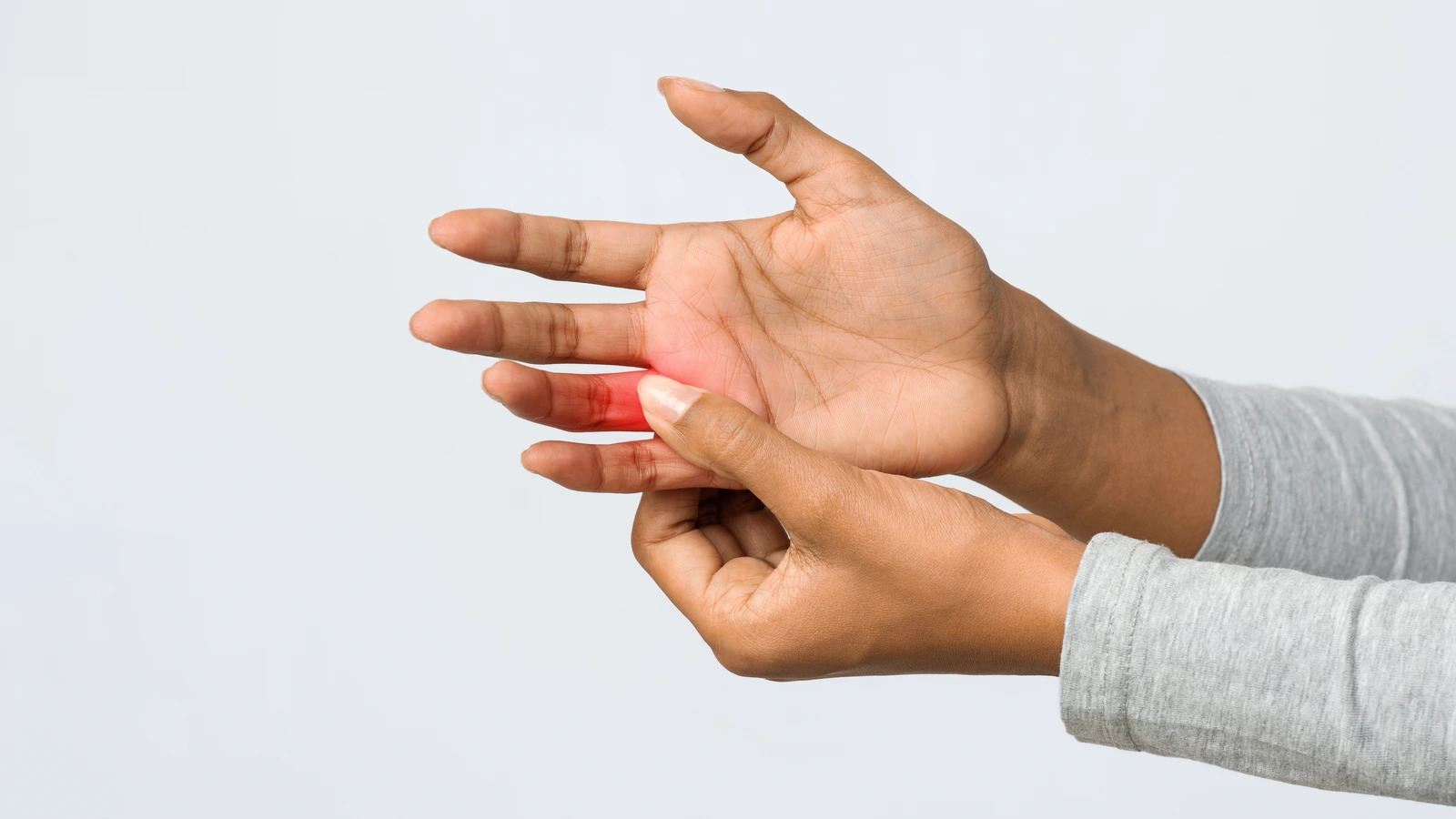
A finger that works normally during the day can feel surprisingly stiff after a night’s sleep. When you wake up, it may catch as you try to straighten it, produce a click or remain temporarily locked in a bent position.
This pattern is characteristic of trigger finger, also known as stenosing tenosynovitis. The problem does not arise directly from the joint. It involves the mechanism that allows the flexor tendon to glide as the finger bends and straightens.
Dr. Daniel Durand’s website identifies stiffness and catching after a period of inactivity, particularly in the morning, among the typical features of trigger finger.
Why can a tendon begin to catch?
Flexor tendons function somewhat like cables.
When you close your hand, they glide through several structures that hold them close to the bones. One of these structures can become too narrow relative to the tendon passing through it.
The tendon may then have difficulty gliding smoothly.
At first, someone may notice only resistance or tenderness at the base of the finger. As the restriction becomes more pronounced, the tendon suddenly passes through the narrowed area, producing the triggering sensation.
In more advanced cases, it may become difficult to straighten the finger without using the other hand.
Why is it often worse after waking?
Trigger finger tends to become stiffer after inactivity.
The fingers remain relatively still for several hours during the night. With the first movement in the morning, the tendon must begin gliding again through an area that is already restricted.
The finger may therefore catch more during the first few cycles of bending and straightening.
After moving it several times, some patients find that the finger gradually becomes more flexible. Improvement during the day does not necessarily mean that the problem has resolved.
When the catching returns every morning or begins occurring during everyday activities, the condition deserves assessment.
Can trigger finger become completely locked?
Yes, in more significant cases.
At first, there may be only a small click. Later, the patient may need to apply more force to straighten the finger.
In some cases, the finger remains bent and must be straightened with the opposite hand. Dr. Durand’s website explains that a severely affected finger may eventually become impossible to straighten.
It is therefore not necessary to wait until the finger is completely locked before requesting an assessment.
Which fingers are most often affected?
Trigger finger can affect different digits and, in some cases, more than one finger.
The ring finger and thumb are among the common locations. When the thumb is involved, the condition is known as trigger thumb.
A small tender area or nodule may also be felt in the palm near the base of the finger.
This is not necessarily where the patient feels the click, which helps explain why some people initially assume that the problem comes from the joint itself.
Is surgery always necessary?
No.
The severity and duration of symptoms and their effect on hand function all need to be considered.
Depending on the circumstances, different approaches may be considered before or instead of surgery. Dr. Durand offers injection treatment for certain hand conditions, including trigger finger.
When locking persists despite conservative treatment or becomes sufficiently limiting, trigger finger decompression may be discussed. The procedure releases the portion of the sheath that prevents the tendon from gliding normally.
Trigger finger treatment in Montreal, Laval and Châteauguay
Dr. Daniel Durand treats trigger finger and other conditions involving the tendons, nerves and joints of the hand. His website lists clinic locations in Montreal, Laval and Châteauguay.
An occasional click does not necessarily have the same significance as a finger that must be manually unlocked every morning. An assessment can help determine the stage of the problem and which options may be appropriate.
If your finger repeatedly catches, clicks or locks, schedule an assessment with Dr. Daniel Durand in Montreal, Laval or Châteauguay.