
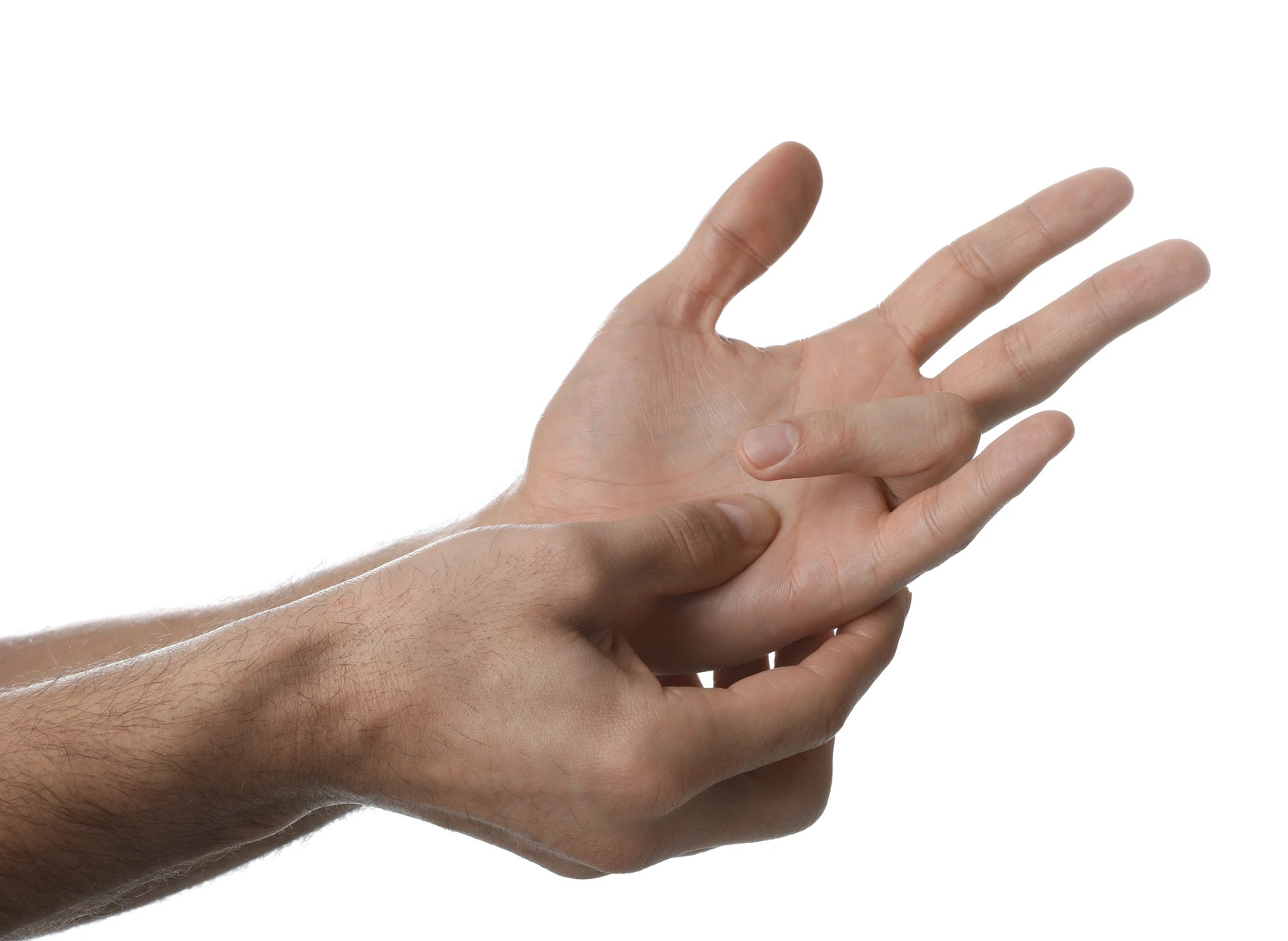
Can Trigger Finger Affect More Than One Finger or Both Hands?
Can trigger finger affect several fingers or both hands? Learn why multiple digits can become involved and when recurrent locking should be assessed in Montreal.
Trigger finger may begin in a single digit, but patients are sometimes surprised when another finger starts developing similar symptoms.
The pattern may not be identical. One finger might lock noticeably in the morning while another produces only a subtle click or tenderness at the base of the digit.
Trigger finger can affect more than one finger, and symptoms may occur in either hand. When several digits become involved, it becomes particularly important to distinguish true trigger finger from generalized hand stiffness or another condition.
Each finger has its own flexor tendon system
When the fingers bend, their flexor tendons glide through a system of tendon sheaths and pulleys.
Trigger finger develops when smooth tendon excursion becomes restricted. Instead of travelling freely, the tendon encounters resistance as the finger moves.
This is why the problem can be remarkably localized.
One finger may move normally while the adjacent finger catches every morning. If another tendon later develops the same type of restriction, a second trigger finger can appear.
What does multiple trigger finger feel like?
The symptoms do not necessarily start simultaneously.
A patient may initially notice tenderness in the palm beneath one finger. A few months later, another digit begins clicking.
Common symptoms can include morning stiffness, a palpable or tender area near the base of the affected finger, clicking during flexion and extension, or a finger that temporarily remains bent.
In more significant cases, the opposite hand may be needed to straighten the digit.
When several fingers are involved, patients sometimes describe their entire hand as “stiff.” Identifying which digits actually trigger during movement helps clarify the problem.
Is every stiff finger a trigger finger?
No.
Arthritis can produce stiffness and pain around the joints. Tendon injuries, Dupuytren’s disease and other hand conditions can also interfere with movement.
Trigger finger has a mechanical quality that can help distinguish it: the tendon catches during motion and may suddenly release.
The location of pain is also informative. Trigger finger frequently produces tenderness closer to the palm at the base of the digit rather than exclusively within a finger joint.
An examination can distinguish between these patterns when symptoms overlap.
Why do some people develop trigger finger in several digits?
There is not always one identifiable explanation.
Trigger finger becomes more common with certain medical conditions and may occur alongside other hand disorders. Age and changes affecting the tendon and its surrounding structures can also contribute.
When multiple fingers are involved, the broader medical context may therefore be relevant.
This does not mean that several affected fingers automatically indicate a systemic disease. It means the pattern deserves to be considered as part of the assessment rather than treating each click in isolation.
Do all affected fingers need the same treatment?
Not necessarily.
One finger may have mild symptoms while another locks repeatedly.
Treatment decisions can therefore differ even within the same hand. An occasionally symptomatic finger does not automatically require the same intervention as a digit that remains locked or substantially interferes with function.
Depending on the presentation, non-surgical treatment may be considered. Persistent or more advanced mechanical locking may lead to discussion of trigger finger decompression.
What if one trigger finger was already treated?
Development of symptoms in another digit does not necessarily mean that treatment of the first finger failed.
Each tendon has its own anatomical pathway. A new trigger finger can therefore represent a separate problem.
Likewise, recurrent symptoms in the same finger should be distinguished from new symptoms appearing in a neighbouring digit.
This distinction is particularly useful for patients who have previously undergone an injection or surgical release.
Trigger finger treatment in Montreal, Laval and Châteauguay
Dr Daniel Durand’s hand surgery practice treats trigger finger as well as other tendon, nerve and joint conditions affecting the hand.
Patients from Montreal, Laval, Châteauguay and surrounding Quebec communities can be assessed to determine whether one or several tendons are responsible for the symptoms.
If several fingers have started clicking, becoming stiff or locking, schedule an assessment with Dr Daniel Durand to identify what is restricting their movement and which treatment options may be appropriate.