
Dupuytren’s Treatment: When Are Injection or Surgery Considered?
Learn how Dupuytren’s nodules, cords and contracture are assessed and when observation, injection or surgery may be discussed.
A firm lump in the palm does not always need immediate treatment. In Dupuytren’s disease, nodules can develop into cords beneath the skin and gradually pull one or more fingers toward the palm. Treatment decisions are usually based on contracture and hand function—not on the presence of a lump alone.
Because the condition can progress at very different rates, the right time to intervene is individual. Some people remain stable for years, while others develop increasing difficulty placing the hand flat, wearing gloves, washing the face or reaching into a pocket.
What is Dupuytren’s disease?
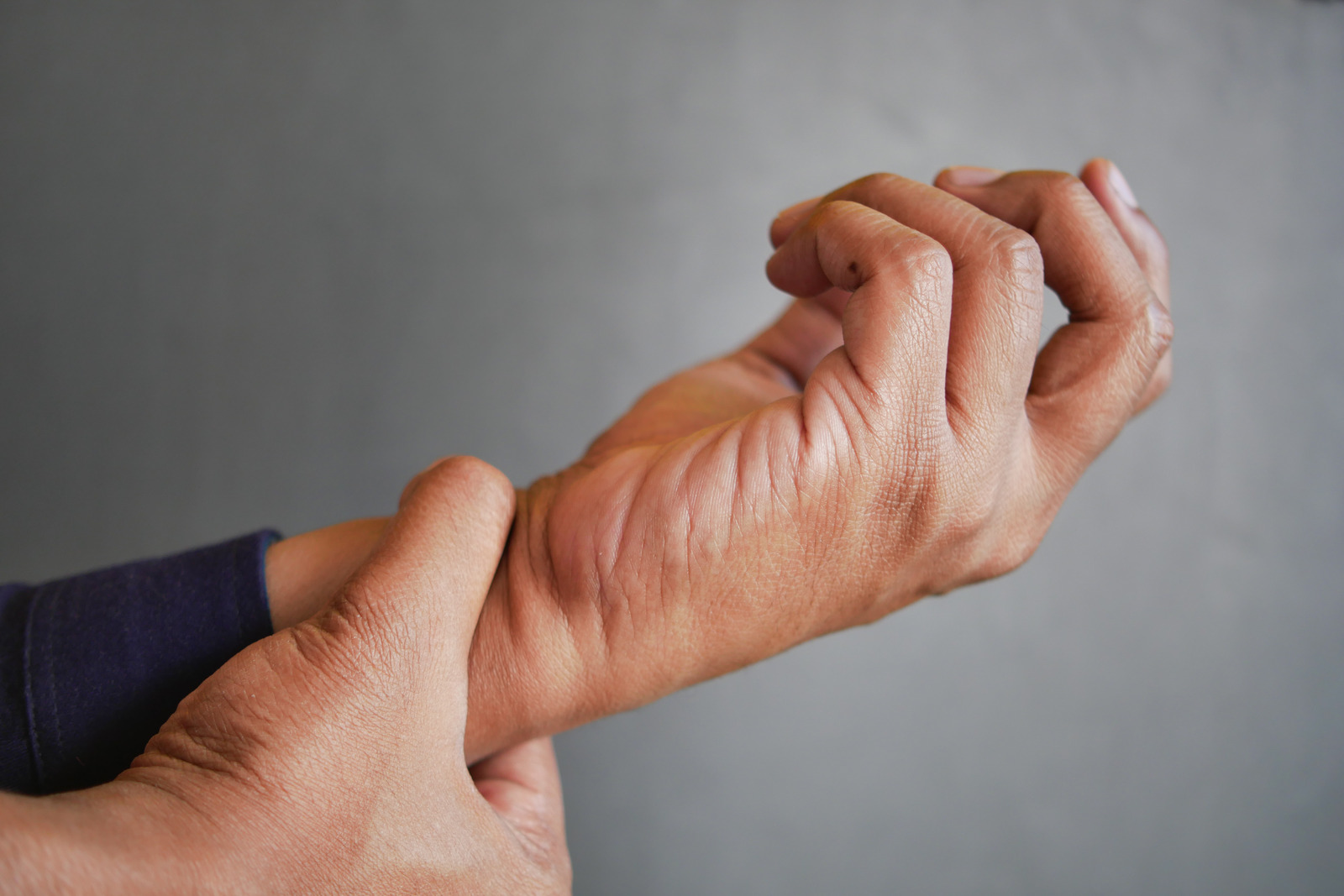
Dupuytren’s disease affects the palmar fascia, a layer of connective tissue beneath the skin. The abnormal tissue may begin as a nodule and later form a cord. As that cord shortens, it can bend a finger at the knuckle or middle joint.
The ring and little fingers are often involved, although other digits can be affected. The condition is not caused by a tendon becoming too short, and forcing the finger straight does not remove the diseased fascia.
A nodule, a cord and a contracture describe related but different findings. This distinction helps explain why an early nodule may be observed while a function-limiting contracture prompts a treatment discussion.
Does every Dupuytren’s nodule progress?
No. The course is unpredictable, and not every lump develops into a substantial contracture. Observation may therefore be reasonable when the finger remains functional and the condition is not changing rapidly.
Monitoring should focus on function as well as appearance. Increasing difficulty straightening the finger, progression across a joint or interference with daily activities provides more useful information than the size of a nodule alone.
Painful or rapidly changing lumps also deserve assessment because not every mass in the palm is Dupuytren’s disease.
When is treatment usually discussed?
Treatment becomes more relevant when a contracture limits useful finger extension or daily hand function. A clinician may assess which joints are involved, the degree and flexibility of contracture, skin quality, previous procedures and whether nerves or tendons are at risk.
The familiar “tabletop test”—whether the palm can lie flat—can help patients notice loss of extension, but it is not a complete treatment rule. A relatively small contracture can be important in a musician or someone who must place the hand flat for work, while another patient may function well with a different pattern.
What does injection treatment involve?
Some treatment pathways use an enzyme injection intended to weaken a Dupuytren’s cord, followed by a controlled manipulation to improve extension. This treats a selected cord; it does not eliminate the biological tendency to form Dupuytren’s tissue.
Product availability, regulatory status and whether this option is currently offered can change by jurisdiction and practice. These details must be confirmed directly with the clinic rather than assumed from older online descriptions.
Potential concerns can include swelling, bruising, skin tears, tendon injury, nerve injury and allergic reaction. Recurrence or progression elsewhere in the hand can still occur.
How does surgery address the contracture?
Surgical treatment may divide a restrictive cord or remove selected diseased fascia. The precise procedure depends on the location and severity of contracture, skin involvement, previous treatment and the structures near the cord.
More extensive correction may require a larger dissection and a longer recovery. The aim is to improve useful finger position and function, but complete correction is not always possible—particularly when a joint has been bent for a long time or has developed secondary stiffness.
Risks include infection, wound-healing problems, nerve or blood-vessel injury, stiffness, pain, swelling and recurrence. Hand therapy and splinting may form part of postoperative care when individually recommended.
Can Dupuytren’s disease come back after treatment?
Yes. Injection and surgery address existing cords or contracture but do not cure the underlying tendency to form abnormal fascia. A treated finger can tighten again, and disease can develop in another part of the same or opposite hand.
Recurrence risk is not the only factor in choosing treatment. Recovery demands, skin condition, severity, previous procedures and the patient’s priorities also matter. A less invasive option may offer a different balance of recovery and recurrence than a more extensive operation.
Frequently asked questions
Should an early palm lump be removed before it bends the finger?
Not routinely. An early nodule without contracture may never create a major functional problem. Assessment is appropriate when the diagnosis is uncertain, the lump is painful or changing, or extension is beginning to decrease.
Can stretching prevent progression?
Stretching cannot be assumed to stop the biological process. A therapist or surgeon may recommend specific mobility or postoperative measures, but forceful self-treatment can irritate the hand and does not remove a cord.
Dupuytren’s assessment in Montreal
The most useful treatment plan begins by identifying whether the hand has an isolated nodule, a flexible cord or a fixed joint contracture—and how that finding affects the person’s real activities.
If a palm cord or bent finger is limiting hand function, schedule a consultation with Dr. Daniel Durand to discuss observation and the currently appropriate procedural options.