
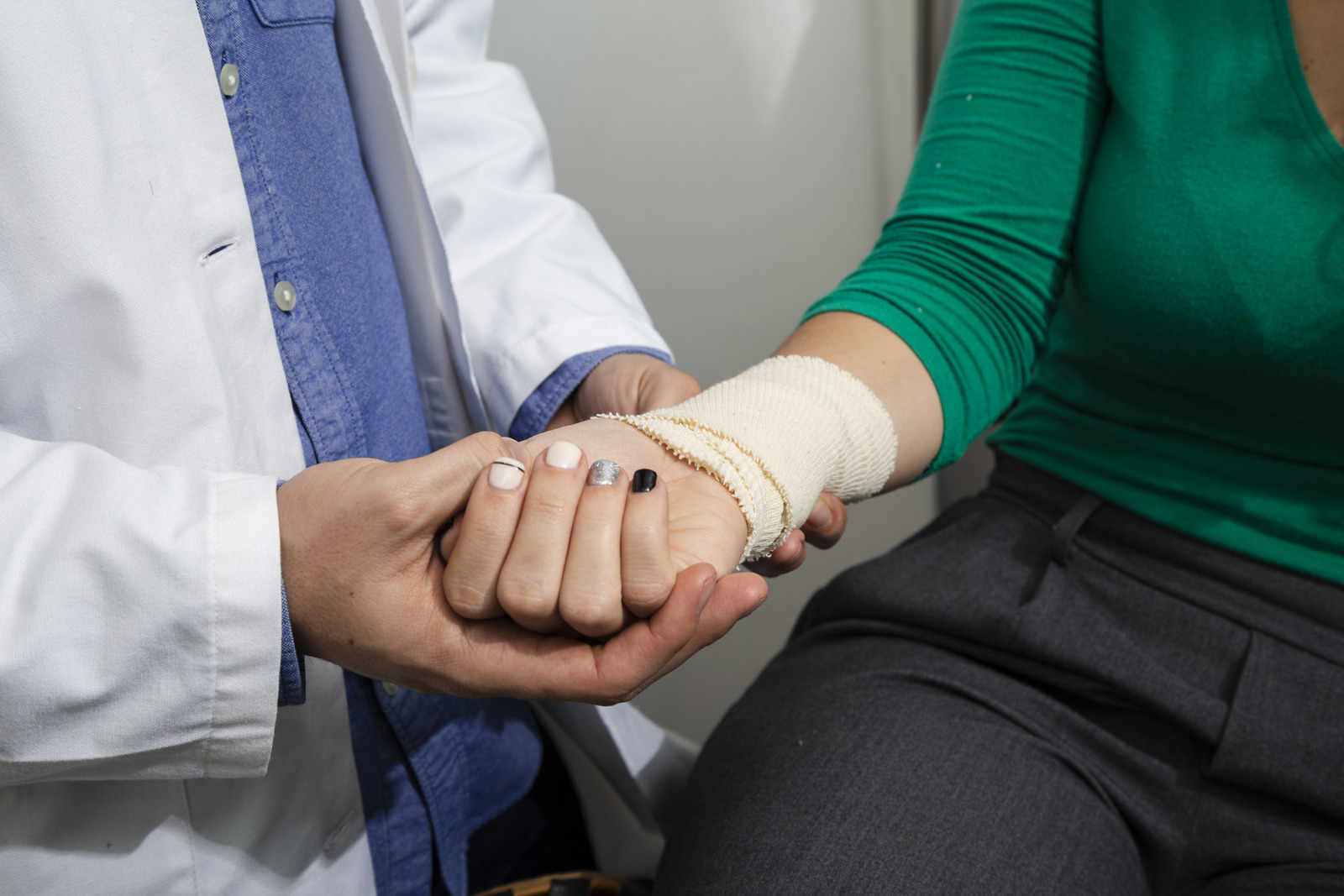
Splint vs Cast: How Is a Hand or Wrist Injury Protected While It Heals?
Learn how splints and casts differ, why swelling affects the choice and which warning signs require prompt assessment during immobilization.
Splints and casts both protect injured tissue, but they are not interchangeable. A splint supports part of the hand or arm and can allow room for swelling. A cast forms a rigid shell around the injured area and provides more complete circumferential protection.
The right support depends on the diagnosis, stability, stage of healing and tissues that must be protected.
What is the difference between a splint and a cast?
A cast is usually made from fibreglass or plaster over a padded lining. Because it wraps fully around the limb, it can control movement reliably but is less adaptable when swelling changes.
A splint may use plaster, fibreglass, thermoplastic, padded metal or a prefabricated brace. It supports selected surfaces and is secured with bandage or straps.
Some splints are intended to remain in place continuously. Others are removable for hygiene or prescribed exercises. “Removable” does not mean it can be left off whenever inconvenient.
Why is a splint often used soon after injury?
Swelling commonly increases during the early phase after trauma or surgery. A non-circumferential splint can accommodate that change more safely than a rigid cast in selected situations.
Once swelling settles, a cast or custom orthosis may be chosen if the injury needs firmer or more precisely positioned protection.
This sequence is not universal. Some injuries need urgent reduction or surgery, while others can be treated in a removable support from the outset.
What structures can immobilization protect?
Splints and casts can protect fractures, ligament injuries, tendon repairs, painful joints and surgical reconstructions. The position matters as much as the material.
A thumb spica support controls different joints from an ulnar-gutter splint. A tendon-repair orthosis may deliberately block one direction of motion while permitting another under supervision.
Using a generic wrist brace for a finger tendon injury may therefore leave the repaired structure unprotected. The support should match the anatomy and treatment objective.
Can immobilization cause problems?
Yes. A support that is too tight can increase pressure on nerves, skin and circulation. A loose or damaged cast may fail to hold the intended position.
Prolonged protection can also contribute to stiffness, swelling, muscle loss and tendon adhesions. The goal is not maximum immobilization for the longest possible time. It is sufficient protection for the tissue, followed by safe movement when healing permits.
Skin irritation and pressure areas can develop beneath an orthosis. Objects should never be pushed inside to scratch the skin because this can create a wound that remains hidden.
Which warning signs require prompt attention?
Increasing pain that is not settling, progressive numbness, burning, marked tightness, blue or pale fingers, excessive swelling, inability to move exposed digits or a foul odour should prompt contact with the treating team.
Wet padding, a cracked cast, drainage or a foreign object trapped inside also requires advice. Severe pain, impaired circulation or rapidly worsening neurological symptoms need urgent assessment.
These signs should not be managed by cutting or reshaping a cast at home.
How is the support cared for?
The team should explain whether the material can get wet, whether the support may be removed and which joints should continue moving. Some fibreglass casts have water-resistant systems, but many liners must remain dry.
Keeping the dressing clean and following elevation or motion instructions can help manage early swelling. Any exercise must respect the specific injury; moving an unprotected repaired tendon is different from moving free fingers beside a stable wrist fracture.
When is the splint or cast removed?
Removal depends on tissue healing and stability rather than pain alone. Follow-up examination and imaging may be needed before reducing protection.
A hand can feel stiff or weak when immobilization ends. Transition may involve a removable orthosis and hand therapy rather than an immediate return to unrestricted lifting or sport.
Immobilization care in Montreal
The best support is the one that protects the correct structure in the correct position while allowing safe function elsewhere.
If a hand or wrist injury needs specialist assessment or the current splint or cast is causing concerning symptoms, contact an appropriate medical service. Dr. Daniel Durand can discuss definitive treatment and protection when indicated.