
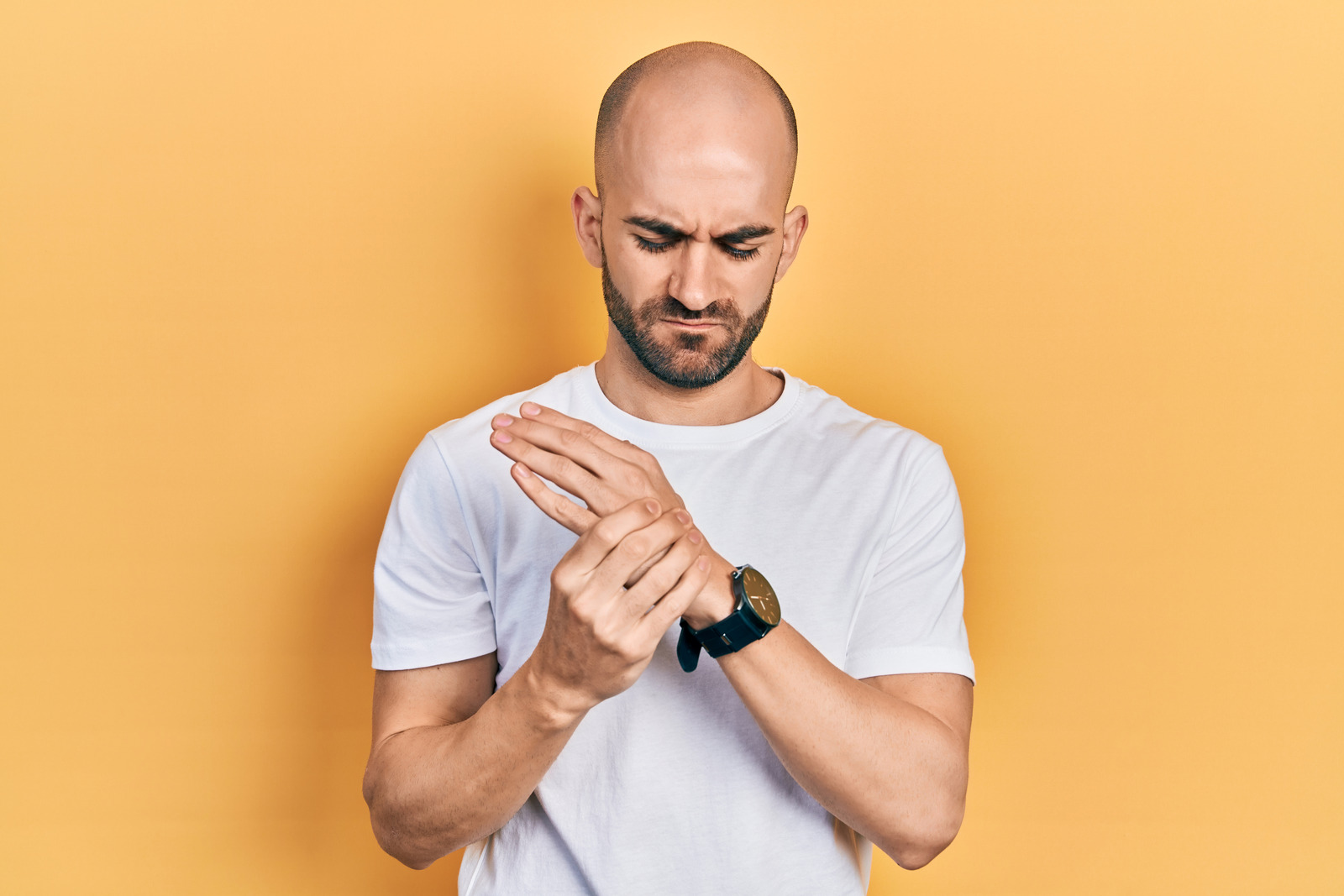
De Quervain’s Treatment: When Are Injection or Surgical Release Considered?
Compare splinting, corticosteroid injection and surgical release for De Quervain’s tenosynovitis, including when each may be considered.
Pain along the thumb side of the wrist can make lifting, opening containers and caring for a child unexpectedly difficult. When the tendons in the first dorsal compartment become restricted and painful, the condition may be diagnosed as De Quervain’s tenosynovitis.
The diagnosis does not automatically lead to surgery. Treatment is usually selected according to the severity and duration of symptoms, the effect on daily function, previous care and whether another condition is contributing to the pain.
What is happening in De Quervain’s tenosynovitis?
Two thumb tendons pass through a fibrous compartment near the wrist. Thickening and irritation around this confined pathway can make tendon movement painful.
Symptoms are commonly felt near the thumb side of the wrist and may worsen with grasping, lifting or moving the thumb. Swelling can occur, and discomfort may travel into the forearm or thumb.
Similar pain can also arise from thumb-base arthritis, a ganglion cyst, an injury or another tendon problem. Location and movement patterns provide clues, but an examination is needed before choosing treatment.
Is rest enough to make it go away?
Reducing a clearly aggravating activity may calm symptoms, particularly when they are relatively recent. Complete avoidance is not always practical, however, and “rest” does not mean the same thing for a parent, musician, healthcare worker or manual worker.
An individualized plan may include activity modification and a thumb-and-wrist support. The purpose is to reduce repeated friction and allow irritated tissues to settle, not to immobilize every patient indefinitely.
Medication may be discussed in some cases, but suitability depends on medical history and other treatments. General online information should not replace advice from a clinician who knows the patient’s health circumstances.
What does a corticosteroid injection do?
A corticosteroid injection places anti-inflammatory medication around the affected tendon sheath. It is intended to reduce local inflammation and improve tendon gliding.
An injection does not change every possible cause of radial-sided wrist pain, which is why confirming the diagnosis matters. Response can vary, and diabetes, symptom duration, anatomy and prior treatment may influence the discussion.
Potential concerns include temporary pain, skin colour or tissue changes, infection and effects on blood glucose. Tendon injury is uncommon but is one reason the location and technique of injection matter.
When may surgical release be considered?
Surgery may be discussed when symptoms remain significant despite appropriate nonsurgical care or when the condition substantially limits hand function.
The procedure creates more room for the tendons by releasing the tight compartment. The surgeon must account for anatomical variations and protect nearby sensory nerve branches. The aim is to reduce mechanical restriction while maintaining stable tendon movement.
Surgical release is not simply a stronger version of an injection. It addresses the confined tendon compartment mechanically, while an injection targets inflammation. The choice depends on the individual clinical situation and response to prior care.
What are the limitations and risks of surgery?
Possible risks include infection, wound problems, scar sensitivity, stiffness, irritation or injury of nearby sensory nerves, tendon instability and persistent or recurrent pain. Symptoms caused by another diagnosis may not improve through De Quervain release.
Hand use generally returns in stages. Comfort with light daily activity does not automatically mean the tissues are ready for repetitive gripping, forceful lifting or unrestricted manual work.
The surgeon’s postoperative instructions should account for the procedure, wound healing, work demands and the way the patient uses the hand.
How are injection and surgery compared?
The decision is better framed as a treatment pathway than a contest between two procedures.
An injection may offer a nonsurgical way to reduce inflammation. Surgical release may be appropriate when mechanical restriction and persistent functional limitations remain despite conservative treatment. Neither option guarantees that all wrist pain will disappear, and neither should be selected without confirming the likely diagnosis.
A useful consultation addresses four questions:
- Is De Quervain’s tenosynovitis the best explanation for the pain?
- How much is the condition limiting work and daily function?
- Which reasonable nonsurgical measures have already been tried?
- What benefits, limitations and risks matter most to this patient?
De Quervain’s treatment in Montreal
Dr. Daniel Durand’s hand surgery practice includes both injection therapy and surgical decompression for De Quervain’s tenosynovitis. Treatment is selected after assessing the painful area, hand function and relevant alternatives.
If pain on the thumb side of your wrist continues to interfere with daily activities, schedule a consultation with Dr. Daniel Durand to discuss the diagnosis and appropriate nonsurgical or surgical options.