
Flexor and Extensor Tendon Repair: Restoring Finger Movement After Injury
Learn how flexor and extensor tendon injuries differ, when repair may be needed and why rehabilitation is essential to recovery.
A finger may look intact after a cut yet no longer bend or straighten normally. That loss of active movement can signal injury to a flexor or extensor tendon—the cord-like structure that transfers muscle force to the finger.
Tendon injuries are time-sensitive because the cut ends can retract, scar can develop and joints can become stiff. An open wound with lost movement should be assessed promptly rather than tested repeatedly at home.
What is the difference between flexor and extensor tendons?
Flexor tendons run along the palm side and bend the fingers and thumb. Extensor tendons lie closer to the back of the hand and straighten the digits.
The two systems have different anatomy and healing challenges. Flexor tendons glide through tight pulleys, while extensor tendons are thinner and spread into a complex mechanism over the finger joints.
The location of injury determines which movement is lost and which repair and rehabilitation strategy may be needed.
How can a tendon be injured?
Sharp cuts are a common cause, but tendons can also rupture during a closed injury, pull away from bone or be damaged by fracture, crush trauma or arthritis.
A partial cut may preserve some motion, making the injury less obvious. Continuing to use a partly divided tendon can risk further damage.
Associated injury is common. The same wound can affect a digital nerve, artery, joint or bone, so normal skin colour does not rule out a significant tendon problem.
What signs need prompt assessment?
Important findings include inability to bend or straighten one joint, a finger resting in an unusual position, weakness against gentle resistance and pain along a tendon after injury.
Deep cuts, contaminated wounds, altered sensation and impaired circulation require urgent care. Patients should not force the finger through repeated movement tests or delay wound assessment while waiting to see whether motion returns.
Examination identifies which tendon is involved. X-rays may look for fracture or a foreign body, and ultrasound can be useful in selected uncertain cases.
When is surgical repair needed?
A completely divided tendon generally cannot restore normal continuity on its own because the ends separate. Surgical repair reconnects the tendon or secures it back to bone.
Some partial injuries and selected closed extensor injuries can be treated without an incision using carefully prescribed splinting. The percentage and location of tendon involvement, quality of movement, wound and associated injuries guide that decision.
Delayed or complex injuries may require tendon grafting, staged reconstruction or another procedure rather than a straightforward primary repair.
Why is hand therapy part of tendon repair?
Healing creates a difficult balance. Too much force can rupture a repair, while too little movement can allow adhesions to bind the tendon to surrounding tissue.
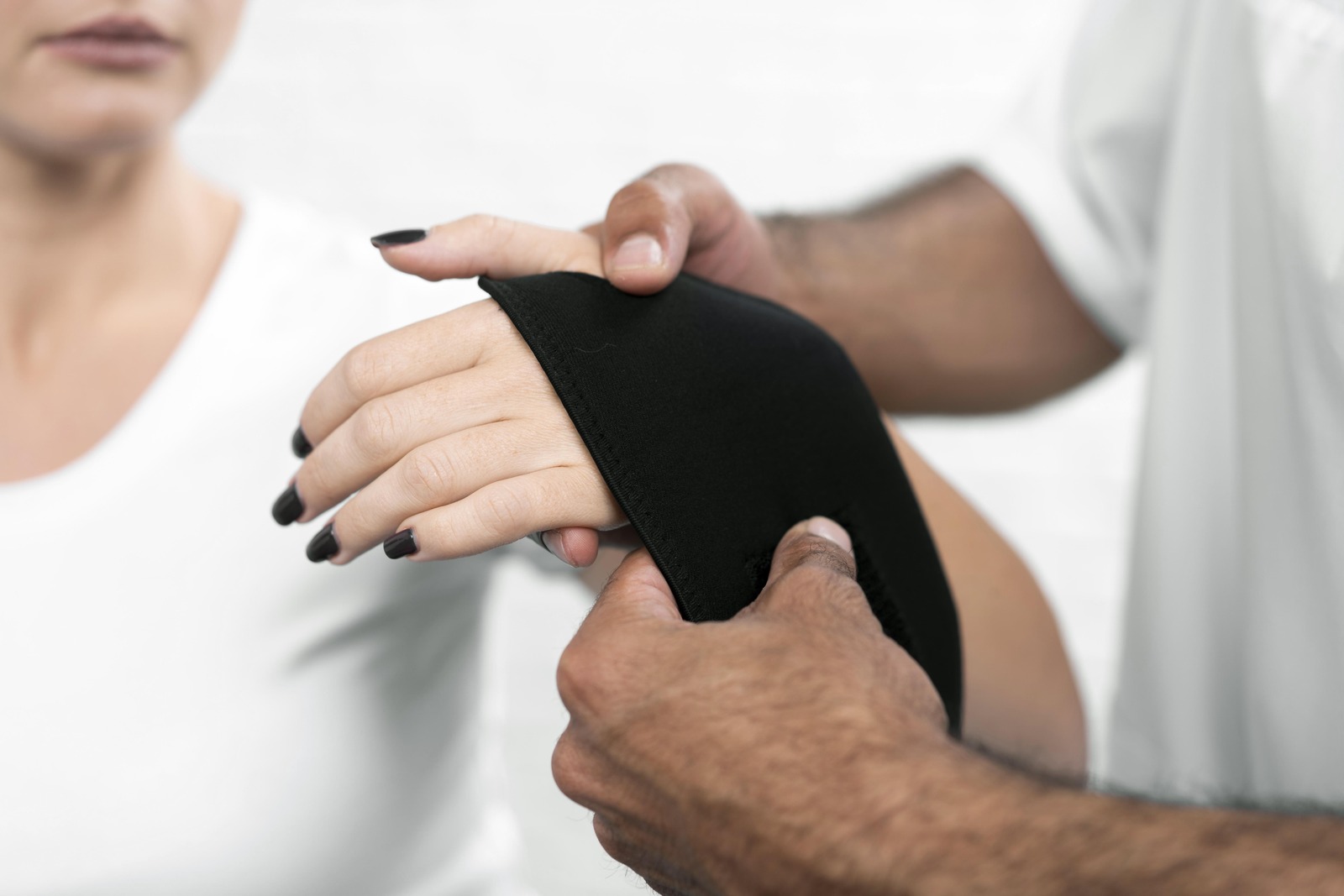
Postoperative protocols use a protective orthosis and controlled motion selected for the tendon, injury zone and strength of repair. The instructions are specific: a flexor-tendon programme is not interchangeable with an extensor-tendon programme.
Hand therapy also addresses swelling, joint stiffness, scar mobility and gradual return of function. Following the prescribed programme is part of the treatment, not an optional add-on after the operation.
What can affect the result?
Outcome depends on injury level, tissue damage, contamination, associated nerve or bone injury, timing, repair quality and participation in rehabilitation.
Potential complications include infection, tendon rupture, adhesions, stiffness, weakness and incomplete motion. A second procedure may sometimes be considered if scar prevents useful tendon glide after healing.
Even with appropriate repair, the finger may not regain exactly the same movement or strength it had before injury.
Frequently asked questions
Can the finger still move with a tendon cut?
Sometimes. A partial injury may preserve movement, and neighbouring structures can create misleading motion. Persistent weakness after a cut still deserves assessment.
Does the skin wound need to be large for the tendon injury to be serious?
No. A small sharp wound can pass deeply enough to divide a tendon, nerve or artery.
Tendon repair in Montreal
The aim of repair is not only to reconnect tissue but to restore safe tendon glide through a coordinated surgical and rehabilitation plan.
If a finger has lost bending or straightening after a cut or injury, seek prompt medical assessment. Dr. Daniel Durand can evaluate tendon injuries and discuss repair and rehabilitation when appropriate.